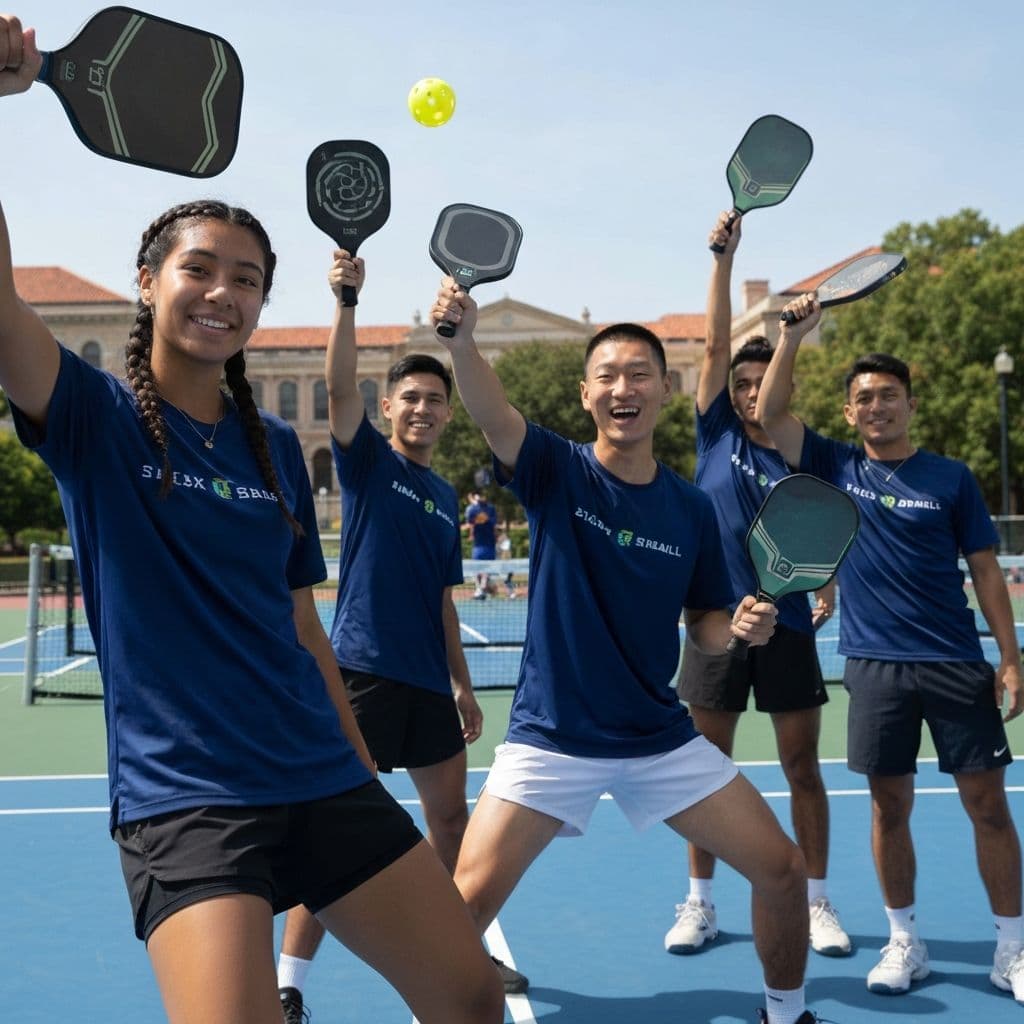
College Pickleball Club Sponsorship: A Funding Guide for Officers and Coaches
Where college pickleball money actually comes from: school funding, grants, brand equipment deals, and local sponsors, plus how to run the whole effort without burning out your officers.
Rally UP Team
Editorial
The Problem Every Club Officer Knows
College pickleball is exploding: hundreds of campus clubs, packed intramural courts, and national collegiate events with real prize pools. What has not kept up is money. Court time, balls, travel to regionals, entry fees, and jerseys all cost real dollars, and most clubs run on member dues plus whatever the rec department spares.
The good news: more funding sources exist for college pickleball right now than most officers realize. This guide maps all of them, roughly in order of effort versus payoff.
Source 1: Your Own School (Start Here)
Before pitching a single brand, max out institutional money. Most schools offer more than clubs actually claim:
- Club sports allocations. Most student governments and rec departments budget per registered club, often with extra tiers for competitive travel. If your club is not registered as a competitive club sport, that reclassification alone can multiply your allocation.
- Travel grants. Many schools fund intercollegiate competition travel separately from the base allocation. Regionals and national championship trips often qualify.
- Facility partnerships. Dedicated court time is funding too. A standing weekly reservation negotiated with campus rec is worth real money in saved court fees.
Source 2: Grants From the Sport's Institutions
Pickleball's governing and rating bodies both put money into the collegiate game:
- USA Pickleball runs community and growth grant programs and maintains collegiate resources. Their partners and programs pages list current opportunities, and regional ambassadors can point you to state-level money.
- DUPR has invested directly in the collegiate scene, including support for college clubs and collegiate leagues. Follow their collegiate program announcements, and get your roster rated: a club whose members carry verified DUPR ratings is more fundable to everyone downstream.
- The National Collegiate Pickleball Association (NCPA) organizes collegiate competition and has run scholarship and donation programs. If your club competes, being in that ecosystem is table stakes.
Source 3: Brand Equipment Deals (The Easiest Yes)
Equipment brands want to be in the college game. A campus club is a room full of players early in their paddle-buying lives, and brands know it. What is realistic:
- Paddle and gear discounts for the whole roster (common, easy to get)
- Free demo gear for club events and tryouts
- Equipment packages for your competitive travel roster
- Ball sponsorship for the season, which is a bigger line item than most clubs realize
Source 4: Local Business Sponsors (The Underrated Cash)
Your club has something no national brand can buy cheaply: a concentrated campus audience plus families and alumni who follow your results. Local businesses pay for exactly that:
- The local paddle and sports shop wants every new player you recruit walking into their store
- Restaurants near campus sponsor jersey backs and post-tournament socials
- Physical therapy and chiropractic clinics love sponsoring competitive club sports
- Real estate agents and local services buy banner presence at any event with parents in attendance
Source 5: Alumni and Community
If your club has existed more than a couple of years, you have alumni. A once-a-season update email with a donation link, plus a named fund at your school's foundation if the school allows it, costs an hour to set up. Pickleball's demographics mean your alumni parents often play too. Community open-play fundraiser nights on your reserved courts convert goodwill into budget.
Running It Without Burning Out: Structure Beats Heroics
The pattern that kills club funding is the heroic president: one person holds every sponsor relationship, graduates, and the club starts from zero. The fix is structural:
- One shared team kit. Your club's story, roster, results, audience numbers, and sponsorship packages in one place that outlives any officer. When the presidency changes hands, the kit and the sponsor history transfer with it.
- Defined officer roles. A president who owns strategy, a vice president who can run the roster and kit, and a treasurer who tracks what was promised to whom. Divided workload, no single point of failure.
- A real pipeline. Track every sponsor conversation by stage the way a sales team would: contacted, in discussion, committed, delivered, renewed. Most clubs lose deals not to rejection but to nobody following up.
Your First 30 Days as a Funded Club
- Register (or reclassify) with your school as a competitive club and claim your allocation
- Get your roster on DUPR and build your shared team kit: story, results, audience, packages
- Pick one equipment brand and one local business and send two tailored pitches
- Put every conversation in the pipeline, and assign an officer to own follow-ups
- Send your first alumni update before the season starts, not after you are broke
Related reading: How to Build a Pickleball Sponsorship Kit That Gets Noticed for the kit fundamentals, and How Much to Charge for a Pickleball Sponsorship in 2026 when brands ask your rates.
Ready to Get Started?
Build your sponsorship kit, connect your DUPR, and start getting noticed by brands.
Create Your Free Account